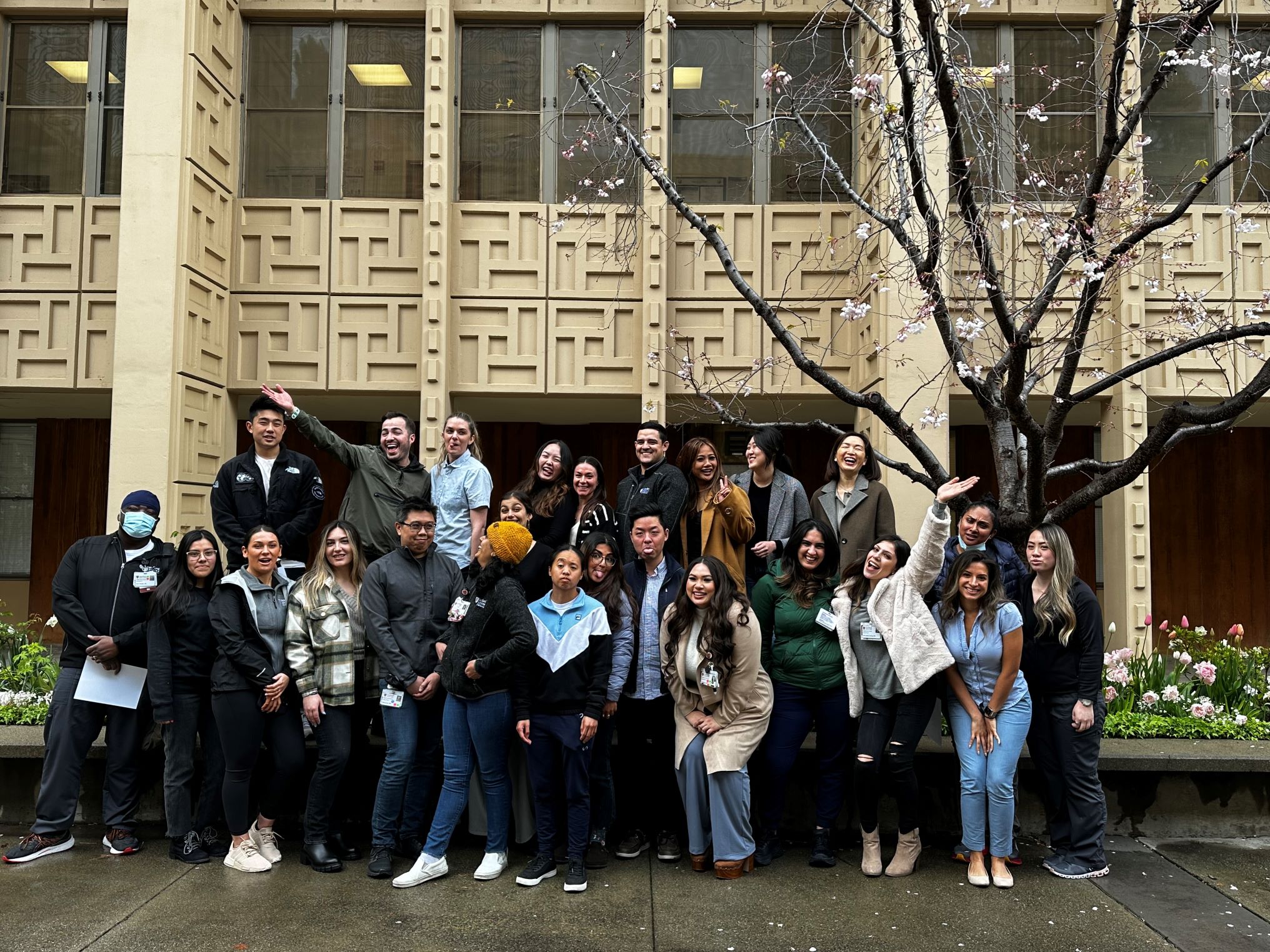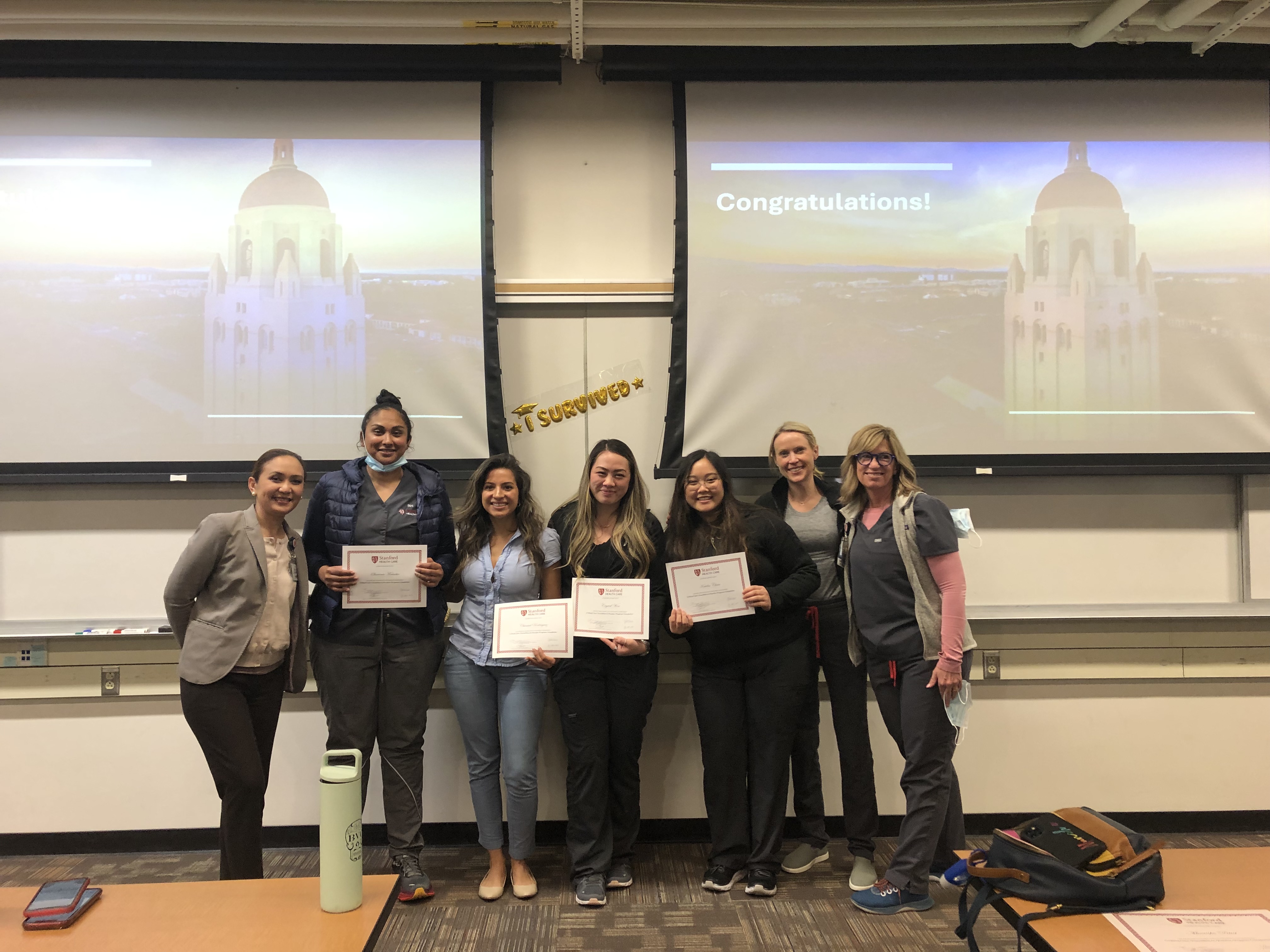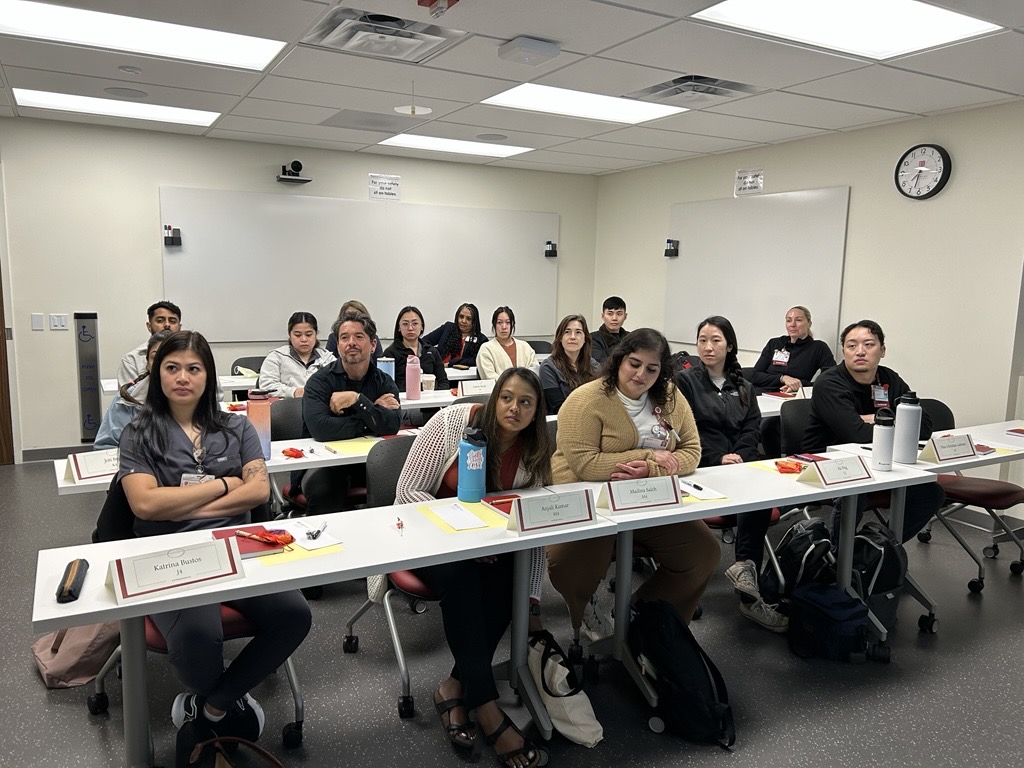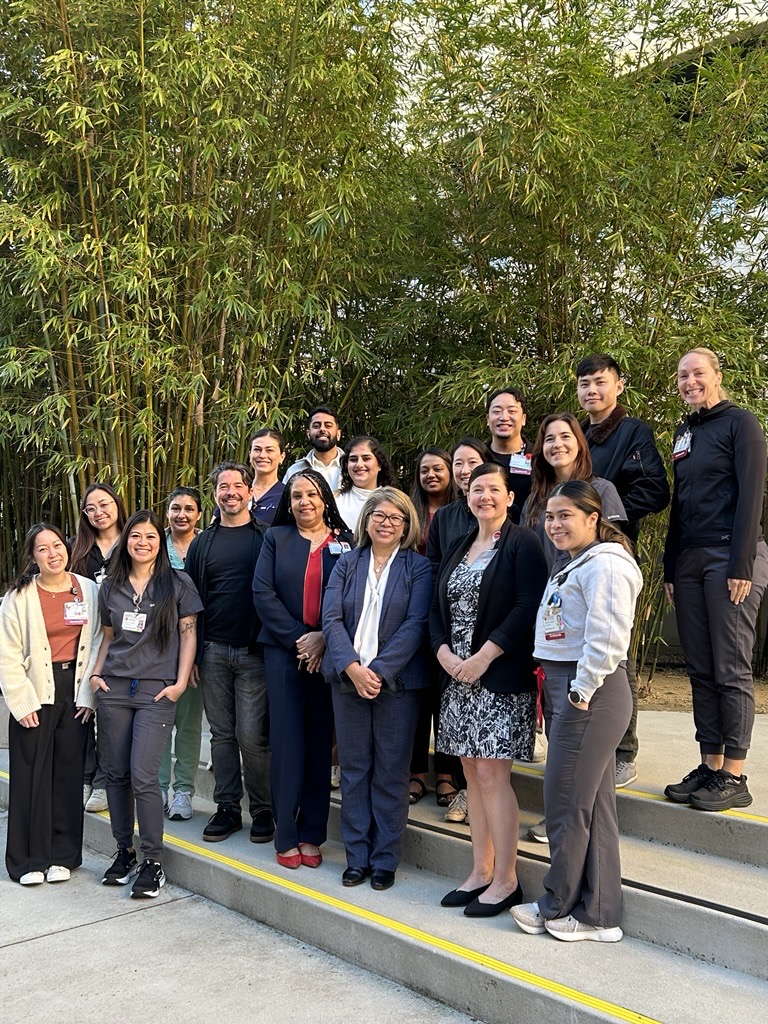
The CCTP program began in the early 2000s as an internal training initiative designed to help employees advance into the Critical Care Region. Over the years, it has evolved into a robust, impactful program that now welcomes nurses from outside Stanford Health Care, providing a strong foundation for those transitioning into critical care.
Our program features the following structure:
As a transition to practice program, the goal of the Stanford Health Care Critical Care Training Program is to support the successful transition of new to Critical Care registered nurses into clinical practice with in our 6 specialty ICUs and the Critical Care Float Pool. Our program is thoughtfully designed for highly motivated, determined and dedicated acute care nurses. The program aspires to develop competent, compassionate, and committed clinical nurses who make a positive impact in the lives of our patients.
Support Structure: Group mentorship, peer support activities and individualized check-in sessions support the successful transition to practice for new to ICU nurses.
Workshops: Throughout the program, these workshops focus on Emotional Intelligence, Resiliency, Critical Thinking, and Therapeutic Communication
Application Based Learning: Monthly seminars that foster group learning facilitated by content experts focusing on- Bridging the Knowledge Gap from acute care to critical care, Leadership, Quality Outcomes, and Professional Role
Immersive Clinical Training: 280+ hours of direct clinical orientation with a trained preceptor utilizing a structured precepting model
ICU Specialties Offered
Our program hires nurses into a variety specialty areas. Participation is dependent on organizational need and subject to change. Below are the areas that participate in the Critical Care Transition to Practice (CCTP) program:
Critical Care Float Pool
Medical/Oncology ICU
Cardiovascular Surgery (CVICU)
Trauma/Surgical Transplant ICU
Medical ICU
Neuro ICU
Cardiac Care Unit (CCU)/Cardiovascular Surgery (CVICU)
Graduate of an accredited ADN, BSN, or MSN program. Accredited online programs are included.
Two years of Acute Care or Emergency Department RN experience within the last three years is required in the USA. (Excluding inpatient psychiatric and PACU)
No more than one year of ICU experience.
At Time of APPLICATION
California Registered Nurse (RN) license
Basic Life Support (BLS) certification for providers issued by the American Heart Association
Advanced Cardiac Life Support (ACLS) certification issued by the American Heart Association
Application Requirements:
Cover Letter
Resume & Work Experience: Must provide job title, responsibilities, and time frame for employment
Application Questions Completed
Critical Dates
Cohort 24 Applications Open:October 9th, 2026 – October 16th, 2026 Panel Interviews: January 2027 Cohort Starts: March 15th, 2027
Frequently Asked QuestionsWho do I address the cover letter to? Can I interview with more than one specialty? What should I include on my resume? Get these answered and more.
The CCTP Program prepared me for a career in the Critical Care setting by providing me with 10weeks of preceptorship with preceptors who provided excellent learning opportunities by advocating for interesting patient assignments and pushing me to become a more competent and organized nurse. Additionally, CCTP provided theory classes that supplemented my learning and helped integrate what I was doing at the bedside into the classroom.
CCTP gave me insight into additional leadership roles that are available on my unit and within the region. I feel like the best part of the program was my preceptorship! I was lucky to have preceptors who cared about my growth and were good at training a nurse transitioning into the ICU.
My “WHY” … I wanted to work in critical care because I wanted to work in a setting where my work would make more of a direct impact to the patients who needed it the most and because I wanted to further grow my nursing skillset. My biggest takeaway from the program is that CCTP provides an excellent opportunity for nurses who want to continue growing their nursing skillsetKevin VCCTP Graduate 2022
I definitely feel like I have improved greatly in terms of clinical proficiency building knowledge and skills to effectively perform careful decision making and practice towards patient care. Jamie ECCTP Graduate 2023
The camaraderie it brought knowing that I'm not alone embarking on this new journey in my career and hearing other people feel the same way I do/did in regards to feeling stuck and imposter syndrome was the best valueRomi U.CCTP Graduate 2023